
I conduct research in five, interrelated areas:
- Religion, peace building and conflict resolution in the Middle East
- War, peace and secular ways of living, within and beyond the Middle East
- Religious pluralism in divided societies
- Local understandings of security
- Islam and foreign policy
I have published on the relationships among politics, security, religion and secularism in Jordan, Israel and Palestine, Lebanon, Syria, Iraq, Egypt, Afghanistan, the United States, and the United Kingdom, including Northern Ireland.
Religion, peacebuilding and conflict resolution
I lead a strand of the Templeton Religion Trust’s Social Consequences of Religion (SCORE) Initiative on Religion and Peacebuilding (2023-2033).
As Co-Director for the Centre for the Study of Divided Societies, King’s College London, I have a long-standing interest in the role of religion in post-conflict reconciliation and conflict prevention. I conduct critical, nuanced, theoretically-robust research and policy analysis on religion, conflict and peacebuilding in the Middle East and beyond. For example, I have carried out research on interfaith dialogue in Jordan, on Christian religious leadership in Jordan, on youth interfaith peace-building in Lebanon and on Islamic and Christian faith-based humanitarianism in Lebanon and Jordan (see Publications, below). I am currently researching youth interfaith peace-building in Lebanon and Northern Ireland with Craig Larkin (see Current Research).
I teach on religion and the politics of peace and war at King’s College London, with a regional focus on the Middle East. I have supervised MA, BA and PhD dissertations on a variety of case studies, within and beyond the Middle East, including on Palestine, Israel, Jordan, the US, Turkey, Iraq, Northern Ireland and Southern Thailand.
Co-convening an MA in Conflict Resolution in Divided Societies since 2011, I developed a mock negotiation programme on Middle East case studies in collaboration with colleagues at King’s and Birmingham-based NGO, Responding to Conflict. This programme built on previous collaborations two other, London-based NGOs. Building on my background working for a children’s rights NGO in Dublin, I am continuing to look to build my collaborations with civil society and academic partners in this area. Please see Looking for Collaborations for more details.
My past experience in this area includes Post-Doctoral Research affiliations with the Center for the Study of Religion and Conflict (Arizona State University, 2010) and the Religion and Ethics in the Making of War and Peace Programme (University of Cambridge/Edinburgh, 2010-11) and an MPhil in International Peace Studies (Irish School of Ecumenics, Trinity College Dublin).
War, peace and secular ways of living
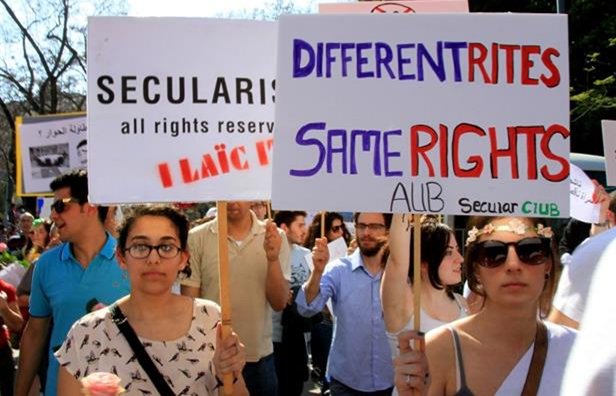
Since September 11th the relationship between religion and violence in the Middle East has grabbed media headlines, particularly in the West. But academic research on global phenomena such as religious doubt, postsecularity, atheism and agnosticism is a new and growing field. There is new, cutting-edge research on these phenomena in the Arab Middle East and Iran, adding to existing literature on Turkey and Israel. Between 2008 and 2020, I was Co-Director of the Nonreligion and Secularity Research Network (NSRN), the first global, interdisciplinary network advancing social science research on religion, nonreligion and secularity (see Networks). I am also Co-Editor of one of the first book series and helped to establish the first academic journal in this field (see Networks).
My own research considers religion, nonreligion and secularity in relation to war, peace and violence (see War, Peace and the Secular). I am the author of the first book to explore these relationships empirically and theoretically: Secular War: Myths of Religion, Politics and Violence. In my second book, Religion, War and Israel’s Secular Millennials: Being Reasonable? I critically analysed how young, “secular” Jewish Israelis understand ethno-religious nationalism among Jewish Israelis and Palestinians, analysing how this sustains Occupation (see Publications, below, and Current Research).
Religious pluralism in divided societies
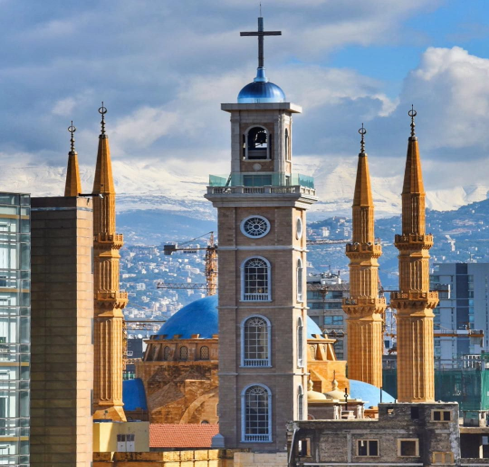
How do Muslims and Christians live together in the Middle East, particularly in the Levant? To what extent is the idea of a post-Ottoman Levantine mosaic where groups live in harmony myth or reality? I have explored these themes in Jordan and Lebanon, considering how policymakers in Jordan use the idea of religious moderation as part of the national brand and also how Lebanese youth understand sectarian relations today (see Publications, below). I have also conducted research on the experiences of Syrian refugees in Jordan and Lebanon and the role of Christian and Muslim faith-based actors in local hospitality and transnational humanitarianism. I am currently working with Craig Larkin on a new project on youth interfaith peacebuilding in Lebanon and Northern Ireland (see Current Research).
Local understandings of security in the Middle East
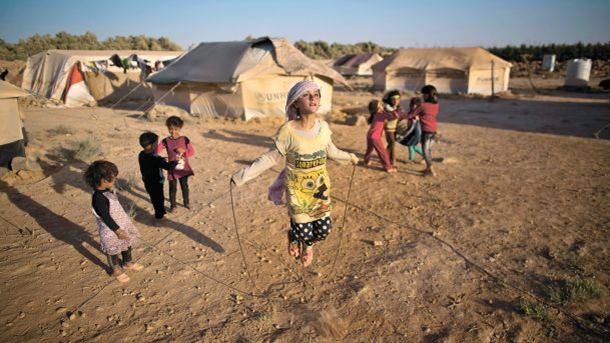
What do safety and fear feel like to people living in the Middle East? What role does emotion and the physical body play in people’s feelings of security and insecurity? How do government policies impact whether people feel safe? How do individual ideas of what it is to be safe intersect with how families, communities, cities and states understand their security collectively? What role do people’s religious beliefs and social networks play in their understandings of what it means to be safe?
I have explored these themes across a variety of case studies including Jordan, Egypt, Israel and Palestine (see Publications, below). Theoretically, I am interested in academic debates on vernacular security, moderation, hospitality and faith-based humanitarianism.
Islam and foreign policy

How do Arab policymakers understand the role of Islam in state foreign policy? How do Western policymakers understand Islam? What do Muslims in the Middle East and the West think about Western government attitudes towards Islam?
I have responded to these questions using a number of case studies, including the UK, Jordan, Iraq, Israel, the US and Afghanistan (see Publications, below).
Theoretically, I am interested in critically analyzing and re-framing a knowledge category which has played a prominent role in Arab and also Western-aligned foreign policy thinking since September 11th: moderation. Moderation is often understood as the opposite of extremism, but I argue that it is a socially-constructed label which is mobilized by both actors in the West and the Middle East, often in relation to religion. To this end, I am active with a network of scholars affiliated with the Geopolitics of Religious Soft Power project, a collaboration between Georgetown University and the Brookings Institution (https://berkleycenter.georgetown.edu/people/stacey-gutkowski) (see Current Research and Publications, below).
Publications
BOOKS
Gutkowski, Stacey. Religion, War and Israel’s Secular Millennials: Being Reasonable? Manchester University Press, 2020.
Drafts of the introduction, conclusion and post-script can be found here.
Gutkowski, Stacey. Secular War: Myths of Religion, Politics and Violence, I.B. Tauris, 2013.
Drafts of the introduction and conclusion can be found here and here.
PEER-REVIEWED JOURNAL ARTICLES AND BOOK CHAPTERS
Gutkowski, Stacey. Moderation as Jordanian Soft Power: Islam and Beyond. In Peter Mandaville (ed.), The Geopolitics of Religious Soft Power: How States Use Religion in Foreign Policy (New York: Oxford University Press, 2023).
Gutkowski, Stacey. I’m Hopeless But I Still Have Hope: Hiloni Millennial Attitudes to Oslo and Its Aftermath. Israel Studies Review 38, no. 2 (2023): 143-164.
Gutkowski, Stacey. Civil War Secularity Talk. Religions 13 (2022): 1-21. (Syria and Northern Ireland)
Gutkowski, Stacey. Playing Host Since 1948: Jordan’s Refugee Policies and Faith-based Charity. The Journal of Middle East and Africa 13, no. 2 (2022): 163-184.
Gutkowski, Stacey and Craig Larkin. Spiritual Ambiguity in Interfaith Humanitarianism: Local Faith Communities, Syrian Refugees and Muslim-Christian Encounters in Lebanon and Jordan, Migration Studies 9, Forthcoming 2021.
Gutkowski, Stacey. Secular Feelings, Settler Feelings: The Case of Palestine/Israel, Religion, State and Society, 49(2), 2021.
Gutkowski, Stacey. Jewish atheists in foxholes: existential beliefs and how war feels. Secular Studies, 1(1), 2019.
Gutkowski, Stacey, Craig Larkin and Ana Maria Daou, Religious Pluralism, Interfaith Dialogue and Post-war Lebanon in Jan-Jonathan Bock, John Fahy and Sami Everett (eds.) Emergent Religious Pluralisms (Palgrave, 2019).
Gutkowski, Stacey. Love, war and secular “reasonableness” among hilonim in Israel-Palestine in Monique Scheer, Nadia Fadil and Birgitte Schepeleren Johansen (eds.) Secular Bodies, Affects and Emotions: European Configurations, (London: Bloomsbury, 2018)).
Gutkowski, Stacey. We are the very model of a moderate Muslim state? The Amman Messages and Jordan’s Foreign Policy, International Relations, 30(2), 2016.
Gutkowski, Stacey. Vernacular security in the Eastern Mediterranean after the Arab Spring: the cases of Egypt and Jordan. The Eastern Mediterranean in Transition: Multipolarity, Politics and Power, Aristotle Tziampiris and Spyridon N. Litsas (eds), Ashgate 2015.
Gutkowski, Stacey. The politics of postsecular borders: transnational religion and the Ground Zero Mosque controversy, Towards a Postsecular International Politics? Changing Patterns of Authority, Legitimacy and Power in a Postsecular World, Fabio Petito and Luca Mavelli (eds), Palgrave Macmillan, 2014
Gutkowski, Stacey. The British secular habitus and the war on terror, Non-religion and Secularity: New Empirical Perspectives (Routledge; eds Lois Lee, Stephen Bullivant and Elisabeth Arweck) 2013.
Gutkowski, Stacey. Educating beyond hysteresis: fostering inquiry-based learning in postgraduate Middle Eastern Studies. HERN-J, http://www.kcl.ac.uk/study/learningteaching/kli/research/hern/hernjvol7.pdf) 2013.
Gutkowski, Stacey. The British secular habitus and the war on terror, Journal of Contemporary Religion, 27(1), 2012, 87-103.
Gutkowski, Stacey. Religion and Security in International Relations Theories, Routledge Handbook of Religion and Security, Chris Sieple, Dennis R. Hoover and Pauletta Otis (eds), (New York and Abingdon: Routledge, 2012).
Gutkowski, Stacey. Misreading Islam in Iraq: secular misconceptions and British foreign policy, Security Studies, 20(4), 2011, 592-623.
Gutkowski, Stacey. Secularism and the Politics of Risk: Britain’s Preventing Violent Extremism Agenda, 2005-2009, International Relations, 25(3), 2011, 346-62.
Gutkowski, Stacey and George Wilkes. Changing chaplaincy: a contribution to debate over the roles of US and British military chaplains in Afghanistan, Religion, State and Society, 2011.
Modood, Tariq. Pragna Patel, Julia Bard, Tope Omoniyi, Joshua A. Fishman and Stacey Gutkowski. The challenge of nonreligion for multifaith politics. in From multiculturalism to multifaithism? Studies in Ethnicity and Nationalism, 10(2), 2010.
Gutkowski, Stacey. Introduction: Gender and warfare. Cambridge Review of International Affairs, 22(2), 2009.
BLOG POSTS
Gutkowski, Stacey. How secular Israelis feel about Palestinians. The Conversation, 28 October 2020.
Gutkowski, Stacey. Groundhog Day all over again – but new ways of studying political violence, peace and the secular in Israel/Palestine and beyond. Religion and IR: International Studies Association Religion and International Relations section, 14 January 2021. Response to me.
Gutkowski, Stacey. It’s not all about Islam: misreading secular politics in the Middle East, Open Democracy, April 2015.
Gutkowski, Stacey. A different kind of war story: Afghan atheism, religious freedom and the mythology of sanctuary, NSRN.net, January 2014.
NON-PEER REVIEWED CHAPTERS FOR A POPULAR AUDIENCE
Gutkowski, Stacey. Does Atheism Promote Peace? Teemu Taira (ed), Atheism in Five Minutes, Equinox Press, 2022.
Gutkowski, Stacey. Secularism, security and War. Phil Zuckerman (ed), Beyond Religion, Cengage, 2016.
 Dr Stacey Gutkowski
You must be logged in to post a comment.